
How can we foster media literacy, critical thinking and civic engagement in increasingly complex information environments?
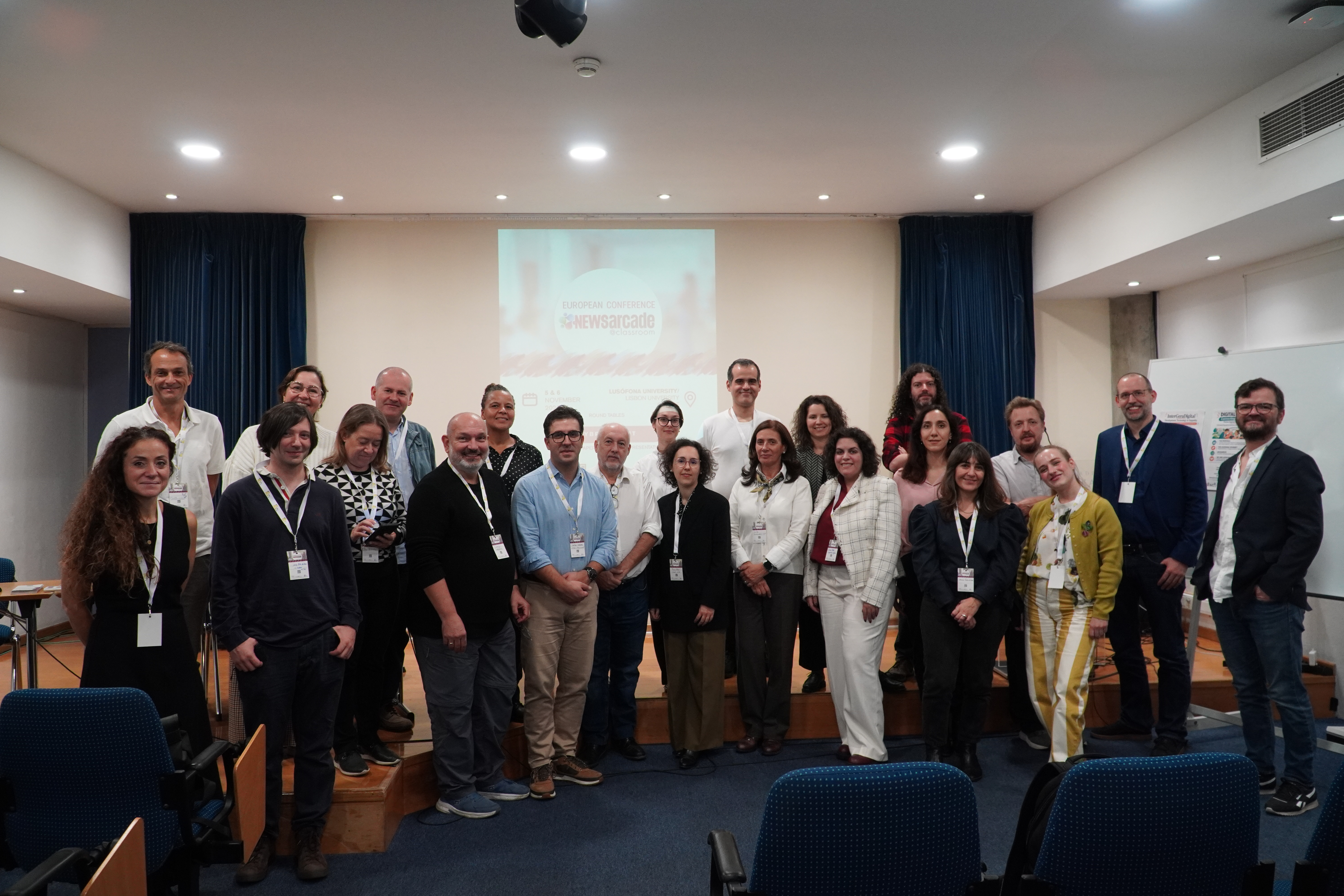
This question was at the heart of the NewsArcade European Conference, held on 5 and 6 November 2026 at Lusófona University – Lisbon University Centre, bringing together researchers, educators, media professionals, students and practitioners from across Europe and beyond.
Organised as part of the NewsArcade@Classroom project, the conference provided an opportunity to exchange knowledge, share experiences and explore new approaches to media education.
Over the course of two days, participants examined a wide range of topics, from news literacy and gamification to game-based learning and educational innovation. Keynote talks, research presentations, poster exhibitions, and networking activities showcased both current research and emerging practices in media education and digital citizenship.
Journalism, algorithms, and civic education
Among the programme highlights was an invited talk by SigmaLive English journalist Charis Martin on journalism in the age of algorithms, examining the challenges posed by digital platforms and algorithmic systems to contemporary news consumption.
Another highlight was a keynote by Pedro Ferreira (FPCEUP) on the potential of video games for civic and political education, exploring how games can serve as tools for learning and participation.
Turning media literacy research into practice
The conference also showcased the work carried out by the NewsArcade@Classroom project partners, from the development of educational tools to the implementation of workshops and the presentation of research findings.
- Maria Ioannou, project coordinator, presented an overview of the NewsArcade@Classroom project.
- George Ioannides from IN2 Digital Innovations and Hans vonknut Skovfoged from PortaPlay discussed the tools developed within the project to support media literacy education.
- Nelima Lassen from International People’s College presented the media literacy workshops conducted as part of the project.
- Ana Oliveira from Lusófona University presented the project’s research findings.
Game creation as an educational tool
The second day featured a roundtable organised by researchers from Lusófona University’s HEI-Lab, titled Literacies and Pedagogies in Game Creation: From Technocentrism to People-Centred Game Design.
Chaired by Pedro Pinto Neves, the roundtable featured contributions from Andreia Pinto Sousa, João Alves de Sousa, Filipe Luz, Micaela Fonseca and Phill Lopes.
The session explored how the process of creating games can itself become an educational experience, placing learners, communities and participation at the centre of game design.
Discussions also addressed the educational, social and cultural dimensions of game development and its potential to support media literacy and civic engagement.
Bringing education, media and research together
A dedicated networking event brought together professionals from education, media, research, game development and civil society, creating opportunities to exchange perspectives and build connections across sectors.
The event underscored the importance of working together to address misinformation and strengthen citizens’ ability to engage critically with news and information.
Beyond the individual presentations and discussions, the NewsArcade conference marked an important milestone for the project. It provided an opportunity to showcase its achievements, share lessons learned and strengthen connections within the growing community of researchers and practitioners working to advance media and information literacy.
Looking ahead
The conference organisers extended their thanks to the speakers, authors, participants, partners and volunteers whose enthusiasm, expertise and commitment made the two days possible.
As the NewsArcade@Classroom project moves forward, the conversations that began in Lisbon serve as a reminder that fostering informed, engaged and critically minded citizens is a shared responsibility, one that benefits from cooperation across disciplines, sectors and countries.
The project is co-funded by the Creative Europe programme of the European Union. Views and opinions expressed are however those of the authors only and do not necessarily reflect those of the European Union or the granting authority. Neither the European Union nor the granting authority can be held responsible for them.
Source: Sigmalive English